
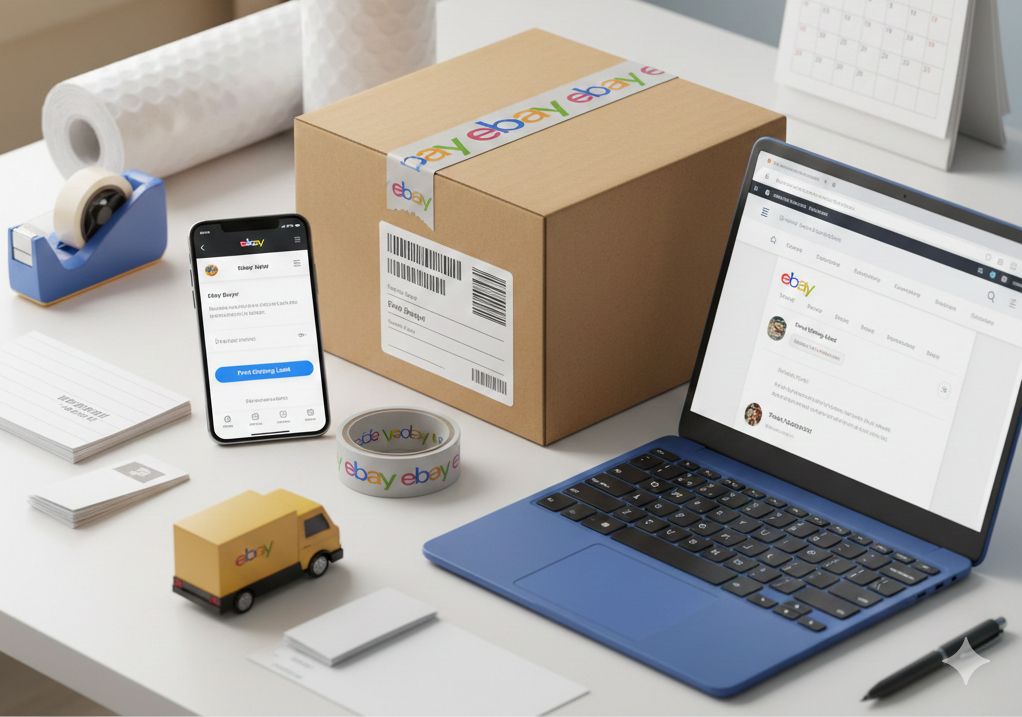
Shipping is one of the most overlooked parts of selling on eBay, yet it plays a major role in profitability, feedback, and repeat buyers. A smooth shipping process protects your items, keeps buyers happy, and prevents unnecessary returns or disputes. On the other hand, poor packaging or unclear shipping costs can quickly eat into profits.
Lets break down eBay shipping in a straightforward way, by covering how to choose shipping methods, package items safely, control costs, and build a system that works as your sales grow.
Why Shipping Matters More Than You Think
Shipping is not just a final step after a sale. It is part of the buying decision. Buyers consider shipping cost, delivery time, and reliability before they click Buy It Now. Even a well-priced item can lose out to a competitor with clearer or cheaper shipping.
Shipping also affects your seller metrics. Late shipments, damaged items, or unhappy buyers can impact feedback and account health. Learning to ship efficiently from the beginning saves time and stress later.
Choosing the Right Shipping Method on eBay
eBay offers multiple shipping options, and choosing the right one depends on item size, weight, and value. For most sellers, the most common options include USPS Ground Advantage, Priority Mail, and calculated shipping.
USPS Ground Advantage works well for smaller items that are not time sensitive. It is often cost effective and includes tracking. Priority Mail is faster and includes insurance, which can be useful for higher value items.
Calculated shipping allows eBay to show buyers the exact shipping cost based on their location. This is often the best option for heavier or fragile items. Flat rate or free shipping can work for lightweight items where costs are predictable.
The goal is to choose a method that balances cost, speed, and reliability without cutting into profit.
Example 1: Small, lightweight items
If you are selling a small item such as vintage jewelry, postcards, trading cards, or small figurines, USPS Ground Advantage is often the best choice. These items typically weigh under one pound, fit easily into small boxes or padded mailers, and do not require rush delivery. Ground Advantage offers tracking at a lower cost, which helps keep shipping affordable without cutting into profit.
Example 2: Larger or fragile items
For larger or fragile items like lamps, glassware, ceramics, or vintage electronics, calculated shipping is usually the safest option. These items require larger boxes, more padding, and sometimes double boxing. Calculated shipping ensures the buyer pays the correct cost based on package size, weight, and distance, preventing the seller from undercharging on heavy or oversized shipments.
Example 3: Items that need faster delivery
When selling items that buyers may want quickly, such as gifts, replacement parts, or time sensitive collectibles, Priority Mail can be the better option. Priority Mail offers faster delivery times and includes insurance, which is helpful for higher value items. While the cost is higher, buyers who need an item sooner are often willing to pay more for faster shipping.
Example 4: Predictable size and weight items
If you regularly sell items with consistent size and weight, such as books, clothing, or small boxed items, flat rate or free shipping may work well. Because shipping costs are predictable, you can confidently build the cost into your item price without risking lost profit.
Understanding Free Shipping vs Calculated Shipping
Many new sellers feel pressure to offer free shipping. While free shipping can increase clicks, it is not always the best choice. Free shipping simply means the cost is built into the item price.
Calculated shipping is often safer for beginners because it reduces guesswork. Buyers see the shipping cost upfront, and you are less likely to undercharge and lose money.
Free shipping can work well when:
- The item is lightweight
- Shipping costs are consistent
- You have room in your pricing
Calculated shipping is often better when:
- Items vary in size or weight
- You sell fragile or bulky items
- Shipping costs fluctuate
Both options can work. The key is choosing intentionally rather than following trends.
Packaging Items the Right Way
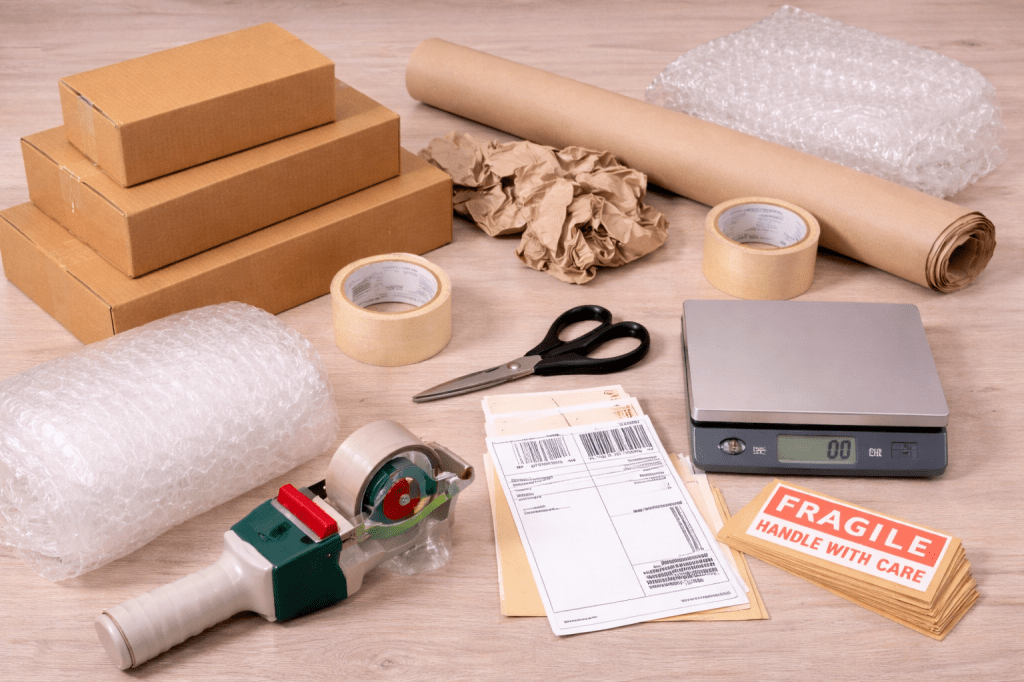
Proper packaging protects your items and your reputation. Damaged items lead to returns, refunds, and negative feedback.
For most eBay sellers, basic supplies are enough:
- Sturdy boxes
- Bubble wrap
- Packing paper
- Tape
- Poly mailers for soft goods
Vintage items, collectibles, and antiques often require extra care. Fragile items should be wrapped individually, cushioned on all sides, and placed in a box with room for padding. Movement inside the box increases the risk of damage.
Avoid oversized boxes whenever possible. Larger boxes cost more to ship and increase the chance of breakage.
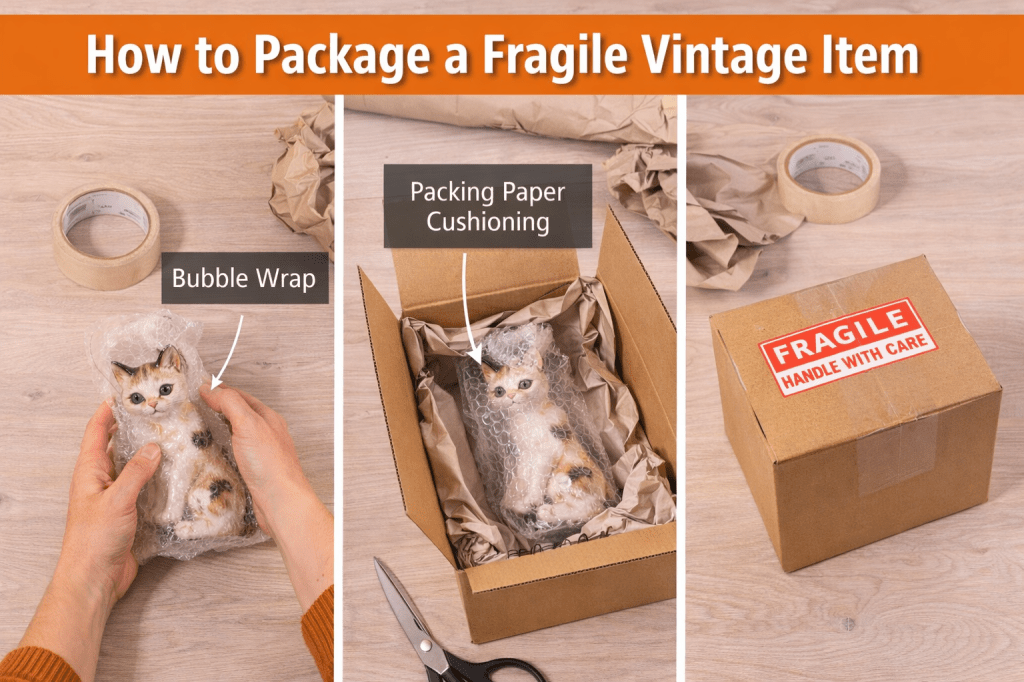
Example: Packaging a fragile vintage item
Imagine you sell a vintage ceramic figurine that is about 6 inches tall.
Start by wrapping the item in several layers of bubble wrap, making sure all sides are covered, including the top and bottom. Secure the bubble wrap with tape so it does not shift.
Next, choose a sturdy box that allows at least two inches of space on all sides of the wrapped item. Add a layer of packing paper or bubble wrap to the bottom of the box.
Place the wrapped figurine in the center of the box, then fill all empty space around it with packing paper or bubble wrap. The goal is to prevent any movement when the box is gently shaken.
Once the item is secure, add a final layer of cushioning on top before closing the box. Seal the box with strong packing tape, reinforcing the seams if necessary.
If the item is especially fragile, you can double box it by placing the sealed inner box into a slightly larger outer box with additional padding in between.
This method protects the item during transit, reduces the risk of damage, and shows buyers that care was taken in packaging. Proper packaging not only prevents returns but also increases positive feedback and buyer confidence.
Reusing Boxes and Saving on Supplies
Shipping does not need to be expensive. Many sellers reduce costs by reusing boxes from online orders or local stores. As long as the box is clean and sturdy, reuse is acceptable.
You can also save by:
- Buying tape and bubble wrap in bulk
- Using recycled packing paper
- Keeping a variety of box sizes on hand
Lower supply costs mean higher overall profit without raising prices.
Weighing and Measuring Accurately
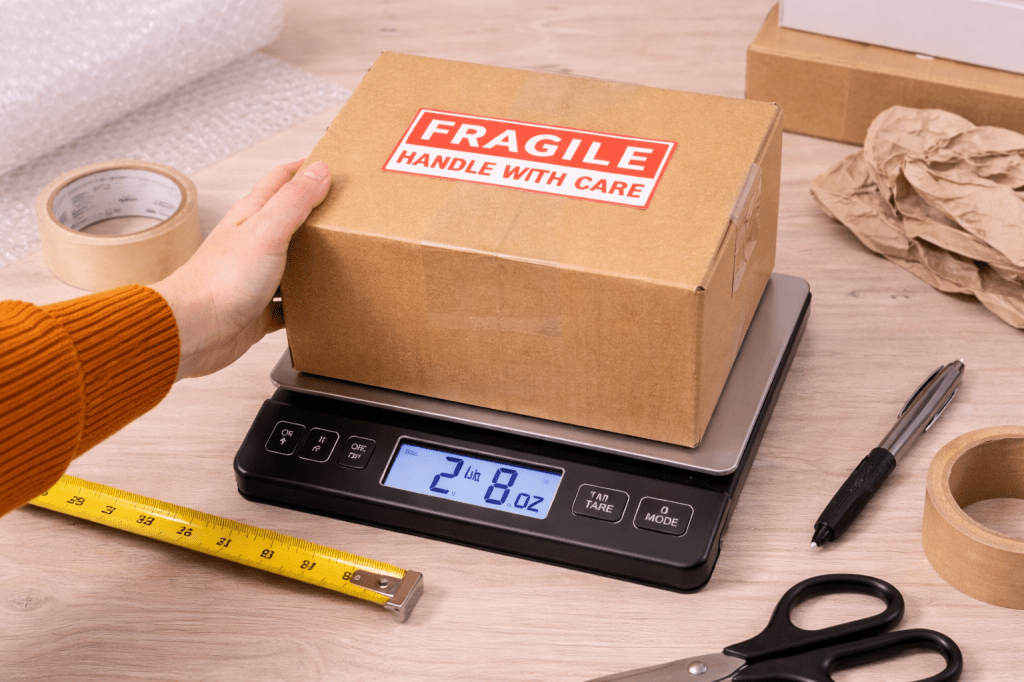
Accurate measurements are essential for shipping success. Incorrect weights or dimensions can result in underpaid postage or surprise charges.
Invest in:
- A digital postal scale
- A tape measure
Weigh items after packaging whenever possible. This gives the most accurate shipping cost and prevents issues after the sale.
Handling Orders Quickly and Professionally
Shipping speed matters. Buyers expect items to ship within the handling time stated in the listing. Setting a realistic handling time protects you and sets clear expectations.
Once an item sells:
- Package it promptly
- Print the label through eBay
- Upload tracking information
- Drop it off or schedule pickup
Using eBay labels simplifies the process and often provides discounted shipping rates.
Communicating With Buyers About Shipping
Most buyers never message sellers about shipping, but when they do, clear communication matters. If a delay occurs, notify the buyer. If an item is fragile, pack it carefully and ship promptly.
Good communication builds trust and can turn a potential issue into a positive experience.
Shipping Mistakes to Avoid
Common shipping mistakes include:
- Underestimating shipping costs
- Using boxes that are too large
- Failing to pad fragile items
- Missing handling deadlines
- Ignoring tracking updates
Each mistake can be avoided with a simple system and attention to detail.
Creating a Simple Shipping Workflow
As sales increase, having a repeatable shipping process saves time. This might include:
- A designated packing area
- Pre stocked supplies
- A checklist for fragile items
- Regular shipping days
A consistent workflow reduces errors and makes selling on eBay more manageable.
What’s Coming Next in the Series
Once your shipping process is in place, the next step is managing sales, returns, and customer service. The next post in this series will focus on handling buyers, responding to messages, managing returns, and protecting your seller account.
Previously in the series:
Next in the series:
 Online Writing Gigs