
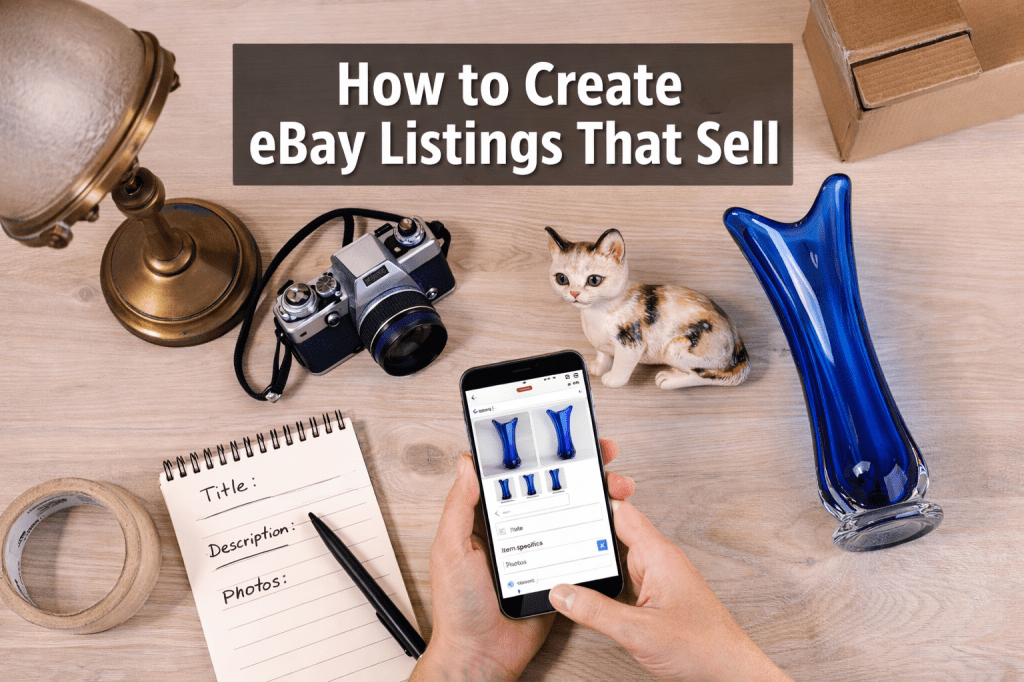
Once you have sourced inventory, the next step is turning those items into sales. Knowing how to create an effective eBay listing is one of the most important skills you can develop as an online seller. Even highly desirable items can sit unsold if they are poorly presented, while well-listed items often sell faster and at higher prices.
This post breaks down how to create strong eBay listings, with a focus on photos, titles, descriptions, and pricing. These are the fundamentals that directly impact visibility in eBay search results and buyer confidence.
Why Listing Quality Matters on eBay
eBay is a search-driven marketplace. Buyers type specific terms into the search bar, and eBay’s system decides which listings appear first. Clear titles, accurate item specifics, and strong photos all help your listing surface in search results.
Beyond search visibility, listing quality affects trust. Buyers cannot touch or inspect your item in person, so your listing must answer their questions before they ask them. The clearer and more transparent your listing is, the more likely a buyer is to commit to a purchase.
Taking Photos That Help Your Item Sell
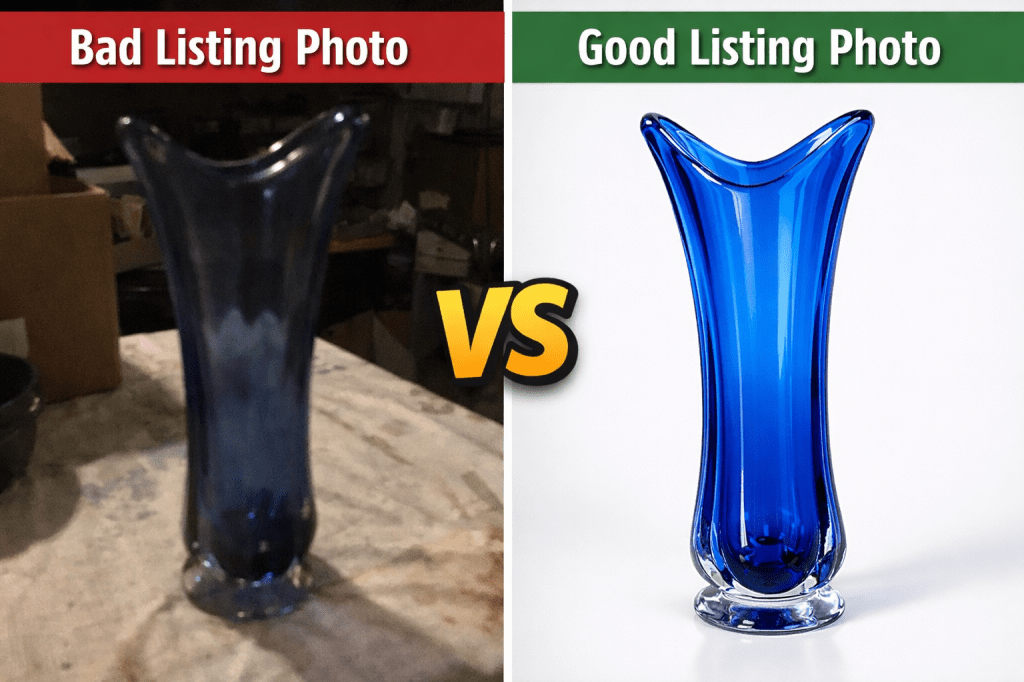
Photos are one of the most important parts of any eBay listing. They are often the first thing a buyer looks at, and poor images can stop a sale instantly.
You do not need professional equipment to take good eBay photos. Natural light, a neutral background, and a clean item go a long way. When photographing items for eBay, aim to include:
- A clear main image showing the full item
- Multiple angles
- Close-ups of important details
- Photos of any flaws or wear
For vintage items, collectibles, and antiques, detail photos are especially important. Buyers want to see markings, signatures, labels, and signs of age. Being upfront about condition builds trust and reduces the risk of returns.
Avoid cluttered backgrounds and heavy filters. Your goal is accuracy, not artistic styling.
Writing eBay Titles That Get Clicks and Views
Your eBay title is one of the biggest factors in whether your item is seen. A strong title uses relevant keywords that match how buyers search.
A weak title is vague and lacks detail. A strong title clearly identifies the item, its type, and one or two defining characteristics. This may include brand, material, era, size, or use.
Good eBay titles are:
- Specific but not stuffed with unnecessary words
- Focused on buyer search terms
- Honest and accurate
Here are some examples of “good” titles vs. “bad” ones:
Example 1
Bad title: Old Vase
Good title: Vintage Blue Art Glass Vase Hand Blown 10 Inch
Example 2
Bad title: Antique Lamp
Good title: Antique Brass Table Lamp with Glass Shade 1920s
Example 3
Bad title: Collectible Figure
Good title: Vintage Ceramic Cat Figurine Mid Century Japan
Avoid filler words like L@@k or must see. These do not improve search visibility and can make listings look unprofessional.
Using Item Specifics to Improve Search Visibility

Item specifics are often overlooked, but they play a major role in how your listing appears in eBay search results. These fields help eBay understand exactly what you are selling and match your listing to buyer filters.
Always fill out as many item specifics as possible, especially:
- Brand or maker
- Type or category
- Material
- Color
- Era or time period
- Condition
For vintage and antique items, use accepted terms such as vintage, pre-owned, or antique when appropriate. If a specific detail is unknown, it is better to say unknown than to guess.
Writing Descriptions That Answer Buyer Questions
Your item description should clearly explain what the item is, its condition, and anything a buyer should know before purchasing. This is where you reduce confusion and protect yourself as a seller.
A strong eBay description typically includes:
- A brief overview of the item
- Condition details and any flaws
- Measurements or dimensions
- Notes on age, use, or history if known
- Shipping and handling notes if relevant
Here’s an example:
Bad description:
Antique lamp works.
Good description:
Antique brass table lamp dating to the early 20th century. The lamp stands approximately 18 inches tall and features a weighted base with original brass finish. Tested and working at the time of listing. The lamp shows age-related patina and light surface wear, with no structural damage noted. Shade is not included.
For vintage goods and collectibles, condition descriptions are especially important. Be honest and specific. If there is wear, crazing, chips, or patina, state it clearly. Buyers appreciate transparency and are less likely to request returns when expectations are set upfront.
Pricing Your Items to Sell
Pricing is where research pays off. Always base your price on sold listings, not active listings. Active listings show what sellers hope to get paid. Sold listings show what buyers are actually willing to pay.
When pricing an item, consider:
- Recent sold prices
- Condition compared to other listings
- Whether shipping is included
- Competition level
New sellers often price too high and wait too long for a sale. Competitive pricing helps build early momentum, attract watchers, and generate feedback.
You can always adjust pricing later, but starting close to market value gives your listing a better chance to sell.
Choosing the Right Shipping Options
Shipping is part of the buying decision. Buyers want clarity and reasonable costs. Choose shipping methods that are reliable and easy to manage.
For most sellers, this means:
- Using calculated shipping for heavier items
- Offering free shipping when it makes sense
- Packaging items securely and appropriately
Always factor shipping costs into your pricing strategy. An item that sells for a high price but costs too much to ship may not be as profitable as it appears.
Common Listing Mistakes to Avoid
Many new sellers struggle because of avoidable listing mistakes, such as:
- Vague titles
- Poor or missing photos
- Incomplete item specifics
- Overpricing
- Ignoring condition details
Improving your listings is one of the fastest ways to increase sales without sourcing more inventory. Small adjustments often lead to noticeable results.
Creating a Repeatable Listing Process
As you grow, efficiency becomes important. Developing a repeatable listing process saves time and reduces errors. This might include:
- A standard photo setup
- A description template
- A pricing checklist
- A consistent storage and labeling system
The easier it is to list items, the more consistent you can be. Consistency plays a role in visibility, sales, and long-term growth.
What’s Coming Next in the Series
Now that you know how to create effective eBay listings, the next post in this series will focus on shipping, packaging, and handling orders efficiently. This includes choosing supplies, minimizing costs, and protecting items during transit.
Strong listings bring in buyers. Smooth shipping keeps them satisfied. Together, these skills form the backbone of a successful eBay business built for long-term income.
Previously in this series:
Next in this series:
 Online Writing Gigs